In August, there was Hurricane Harvey in Texas. An earthquake, killing more than 300 people, hit central Mexico in September. Just weeks later, Hurricane Maria so thoroughly devastated the island of Puerto Rico that years of rebuilding are ahead.
All of these natural disasters hit amid recent policy moves out of Washington that have deepened profound anxieties and resolve among Latino communities throughout the United States.
In response to it all, Latinos are standing strong and doubling down. José Calderón, president of the Hispanic Federation, observes: “These are the moments when we see some of the best of the human spirit. We see values like solidarity and service, compassion and caring. These are the values that guide our work.” His New York-based organization has seeded a relief fund for homeless Mexicans and, for Puerto Ricans, launched the UNIDOS Disaster Relief & Recovery Program.
Other philanthropies that serve Latinos say they, too, are seeing their communities stepping forward. They point to a surge in Latino giving to organized philanthropy and a new commitment to civic engagement, driven by the immediate needs of disaster victims and an urgent threat to the security of families, neighbors and friends.
Paying It Forward
On the immigration front, the Latino Community Fund of Washington has established a “resiliency fund” to support community nonprofits in Seattle and statewide that are providing DACA renewal assistance, legal aid and other services. At the root of the fund’s efforts, says Executive Director Peter Bloch Garcia, is “building a culture of giving, within our communities of color, from folks of color themselves. Our model is about being a community resource, by and for the community.”
“Our model is about being a community resource, by and for the community.”
The California-based Latino Community Foundation is responding with “by organizing and mobilizing its Latino Giving Circle Network to raise funds for the Latinos families hardest hit by recent natural disasters and the harmful national policies impacting our communities,” says CEO Jacqueline Martinez Garcel. As the only statewide foundation in California, “LCF is committed to leveraging the influence and power of this network to support Latino-led nonprofits on the frontlines of social justice” Garcel says. In less than five months, LCF has raised over $500,000 for these groups through its Norcal Wildfire Relief Fund, Mexico Earthquake Relief Fund, and Puerto Rico Hurricane Relief Fund which will support the Hispanic Federation’s UNIDOS fund.
“Latinos are a force. In California, we are 15 million strong and we can use our strength and power to lift up communities and families in their greatest hour of need” Garcel says. “Latinos are ready to pay it forward. Building on the cultural values to ‘lift others up as you rise’ and traditions of generosity, the Latino Community Foundation has established the largest network of civically engaged Latino philanthropists in the country” she says. And the key to leveraging this expression of power, she says, is “demystifying what it means to be a philanthropist.”
That is the core message shaping outreach at the Latino Community Foundation of Colorado. “I hear this it a lot: ‘It’s hard to engage Latinos in philanthropy,’” says Carlos Martinez, executive director. “And my response to that? Yes, it is – if you’re using the same approach with Latinos that you use for everybody else. It has to be tailored.” The task for his foundation and others, he says, “is educating our community and finding different ways to engage folks.”
‘Family Is No. 1’
The family is the focus at the Denver-based fund. “No matter what generation of Latinos you talk to, when you ask them about their top three values, family is No. 1,” Martinez says; the question is how to use this to “create connections across the community.”
“No matter what generation of Latinos you talk to, when you ask them about their top three values, family is No. 1”
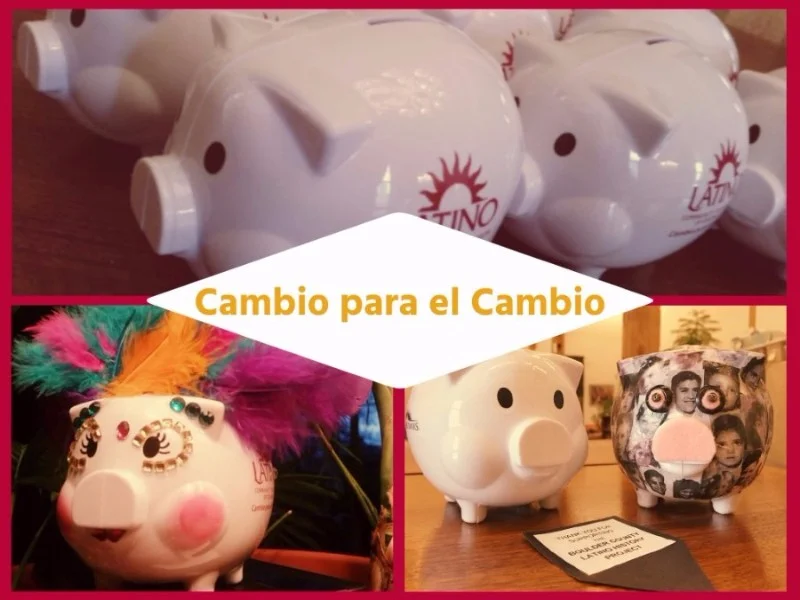
His foundation has designed a pair of fundraising efforts around that “family value.” On a smaller scale is the Cambio para el Cambio/Change for Change campaign: In partnership with a local bank, the Latino Community Foundation of Colorado distributes piggy banks to families along with a set of instructions to make a deposit once a month. “We encourage them to take that time to have a conversation about giving back to the community,” Martinez says. On a larger scale, in August the foundation launched its Generations of Giving campaign with a goal to encourage 100 families to give anywhere between $1,000 and $10,000 a year over a three-year period. “We’re characterizing it as a family pledge – recruiting siblings, parents, other members of the family to contribute manageable amounts. Together we’re creating a legacy.”
Donors can direct their gifts to the foundation’s endowment, to initiatives and grants or to an unrestricted fund. Martinez says a portion of those unrestricted donations might go toward assisting Colorado’s undocumented immigrants. “We do have an initiative on immigration here at the foundation, but we don’t have a lot of individuals giving to that fund – they are giving to the immigration organizations themselves,” he says. “We’re careful not to step on the toes of our grantees, to compete with them for money. We’re only as successful as our grantees.”
In California, Garcel says her foundation is taking a similar approach to funding statewide campaigns for support of undocumented immigrants. “We are standing behind these organizations’ platform to build power together,” she says. Through its Latino Giving Circle Network, she says, “we have access to a network of donors and corporations. As much as we can, we serve as a vehicle to collect that money and turn it over to our partners.”
Latino funders are also noting a new dynamic that holds special significance in a culture where role of the family is paramount: Young people are often the ones leading the call for philanthropic giving and community participation. Garcia, of the Washington-based fund, sees in this dynamic real potential for fostering an enduring commitment among Latinos to advocacy and civic engagement, which his fund views as a central mission. Youth involvement, he says, is “a trend that I want to continue to cultivate. Their hope and activism can create a broader impact.
“Some of the older folks are more jaded,” Garcia observes. “So much of the time – during voter registration, canvassing, at the phone banks – we were hearing, ‘my vote doesn’t count; my voice doesn’t matter.’” Young people, he says, are powerful communicators of “hope and optimism, of the message that people are not isolated.” And he notes that some of the most compelling advocates for engagement in Washington state have been among undocumented youth. “Their leaders have been some of the most effective in the community in encouraging documented families to register: ‘I can’t vote; you can. Please. You have more power than I do.’”
“If you provide Latinos with the appropriate vehicles to give back and a culturally relevant platform to do it, they will engage.”
“They’re watching the same news that we are,” says Garcel of the San Francisco-based foundation. “Given these crises – DACA, Puerto Rico, Mexico – it’s the kids who are saying, ‘Mom, Dad, how can we be a part of this?’” She points out that “the median age for Latinos in this country is 27. What is the next wave of Latino philanthropists going to look like, and how can we ensure that we are being responsive to what drives and motivates giving for them?”
The bottom line, she says, is this: “If you provide Latinos with the appropriate vehicles to give back and a culturally relevant platform to do it, they will engage.”